Published on 11/17/2026 · by Leandro Caldas, glazier, founder of Routeck and creator of the Arena
Laser and cutter together: what the Arena bench was missing
In the first episode of Arena do Vidro, the Hello Kitty mirror arrived already cut on the Router Glass. The rest was up to the contestants, and the sandblast stencil had to be cut by hand. It was the step that weighed most in the judging. This post is about the machine that brings together the two things that were apart on that bench: the laser and the cutter.
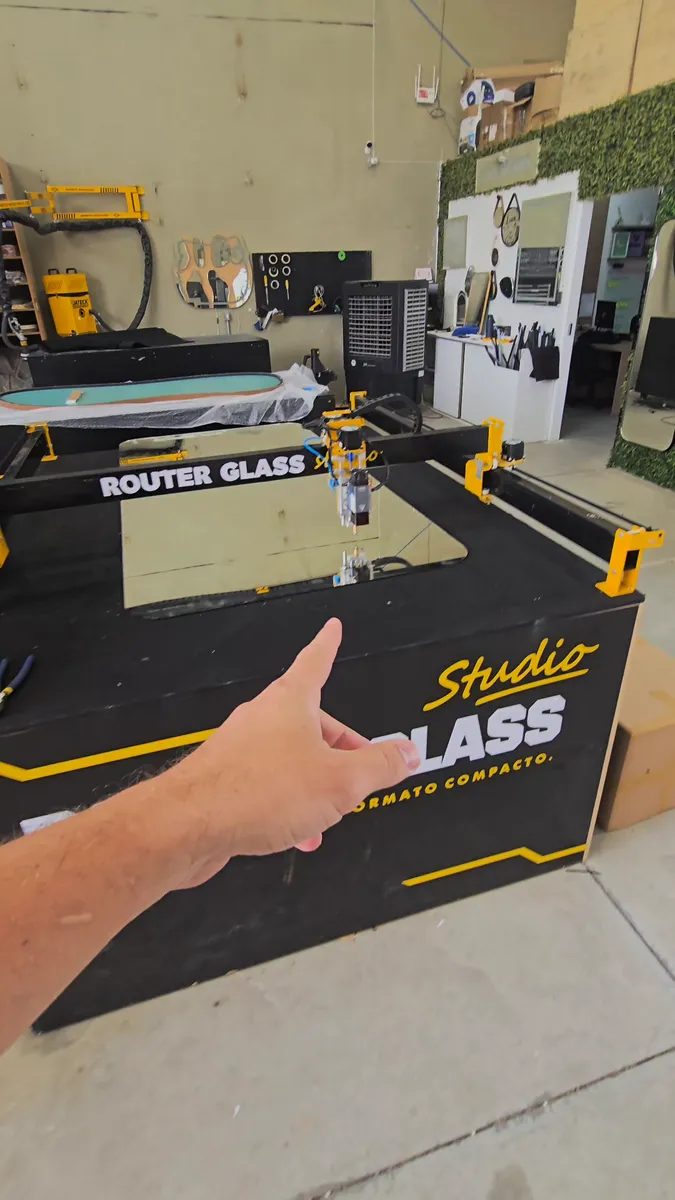
Laser and cutter on the same head
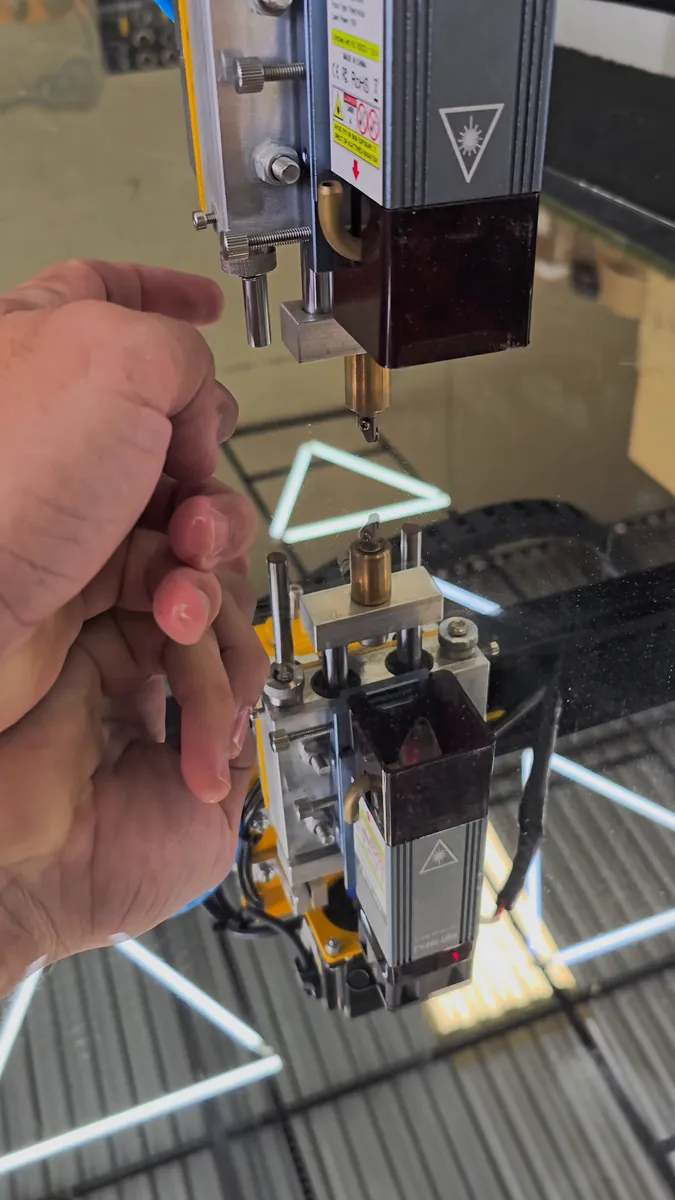
On the Router Glass Studio, the laser and the cutter sit together. The cutter cuts the glass and the mirror. The laser cuts the stencil: the design and the sandblast strip. Both run from the same software, Corte Glass, which comes with the machine.
Back to the EP1 challenge: the mirror outline and the sandblast stencil would come from the same drawing, one on the cutter and the other on the laser. The part the contestants did with a ruler, a blade and an improvised template is the part the laser does.
For anyone working with decorative mirrors, that means one drawing for both steps. The same Corte Glass file holds the mirror outline and the stencil design, so the piece does not have to be drawn again for sandblasting. If the customer asks for another size, the drawing changes once and both parts follow.

How the laser and cutter machine arrives
The Studio arrives in a box. The table is simple: 2.20 x 1.60 m with 50 x 50 steel tube and the 80 x 40 profile bar. The four towers go on the corners, then the heads, the computer and Corte Glass installed. Outside Brazil, the machine is US$ 2,000 plus shipping; import duty is paid by the customer.
What fits on the laser and cutter machine table
The cutting area of the Router Glass Studio is 2,000 x 1,300 mm. That fits a large bathroom mirror, several small pieces side by side, or the whole mirror from a challenge like the one in EP1. Glass and mirror can be up to 10 mm thick. The table the machine needs is 2,200 x 1,600 mm, a little larger than the cutting area.
The table does not come with the machine. It is built on site with 50 x 50 steel tube and the 80 x 40 profile bar, at those sizes, and the four towers go on the corners.
With the laser and the cutter on the same table, the EP1 workflow would look like this: the drawing goes into Corte Glass, the cutter cuts the mirror outline, the laser cuts the stencil, the stencil goes on the mirror and the piece moves on to sandblasting. The ruler, the blade and the improvised template are out of the way.
The Studio has a 12-month warranty, spare parts available and lifetime support for the original buyer. In the Arena, cutting the stencil by hand was the step that weighed most in the judging. With the laser, that step leaves the glazier's hands and goes to the machine, straight from the same mirror drawing.
- Which machine cut the mirror in Arena do Vidro EP1?
- The Router Glass. The Hello Kitty mirror arrived cut on it, and the contestants cut the stencil by hand.
- What does the Router Glass Studio laser do?
- It cuts the sandblast stencil: the design and the sandblast strip.
- Do the laser and the cutter use different software?
- No. Both run from Corte Glass, which comes with the machine.
Want to see the Studio working? Message me on WhatsApp at +55 31 9095-8383.
Cutting the stencil by hand in EP1 · Episode 1: the Hello Kitty mirror · Router Glass Studio