Published on 11/01/2026 · by Leandro Caldas, glazier, founder of Routeck and creator of the Arena
Glass grozing pliers: why thin strips leave teeth on a mirror
Glass grozing pliers solve a lot at the bench, but there is a trap every glazier has fallen into: taking off a strip that is too thin. In the Arena do Vidro final it happened on camera. The mirror had to lose a very small piece, the score did not run all the way, the piece went to the pliers and the edge ended up full of teeth. From there on, it was sandpaper.
In this post I explain what happened, why a thin strip leaves teeth and the rule that came out of the bench: leave at least half a centimeter to take off. The full episode is in the video above.
What happened in the final
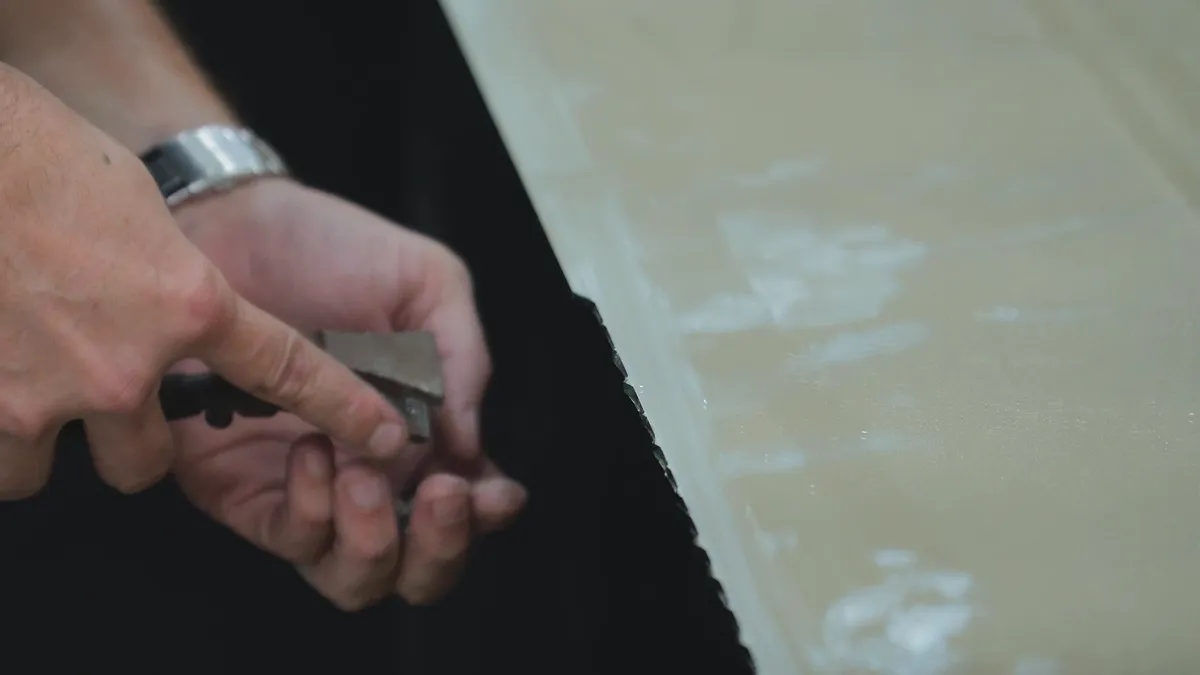
The challenge was a mirror with a metal frame that could stand on its own, in 60 minutes. Halfway through, Janael’s mirror needed a small size adjustment. He scored it, but the strip that had to come off was too narrow to break out in one go. It went to the pliers, nibbling a bit at a time, and the edge came out jagged.
At the bench the comment was blunt: he should have taken off half a centimeter. Every time you take off too little, that is what you get. The advice was to take off more, leave at least half a centimeter to come off. With the edge full of teeth, the way out was to sand that glass and not lose the piece.

Why a thin strip leaves teeth
This is bench knowledge, not a lab number. A score only opens clean when you can lever both sides of it. With a wide strip, the piece coming off has body, the force spreads out and the crack runs straight along the score.
With a strip a few millimeters wide there is nothing to grip. You squeeze the pliers at one point, the glass breaks only there and the crack wanders off the score. Repeat that along the edge and you get the row of teeth we saw in the final. Every tooth then becomes sanding or edger work.
Half a centimeter and other rules for the pliers
- Plan the cut so at least half a centimeter is left on the side coming off. If the size calls for less, re-cut with margin instead of nibbling the edge.
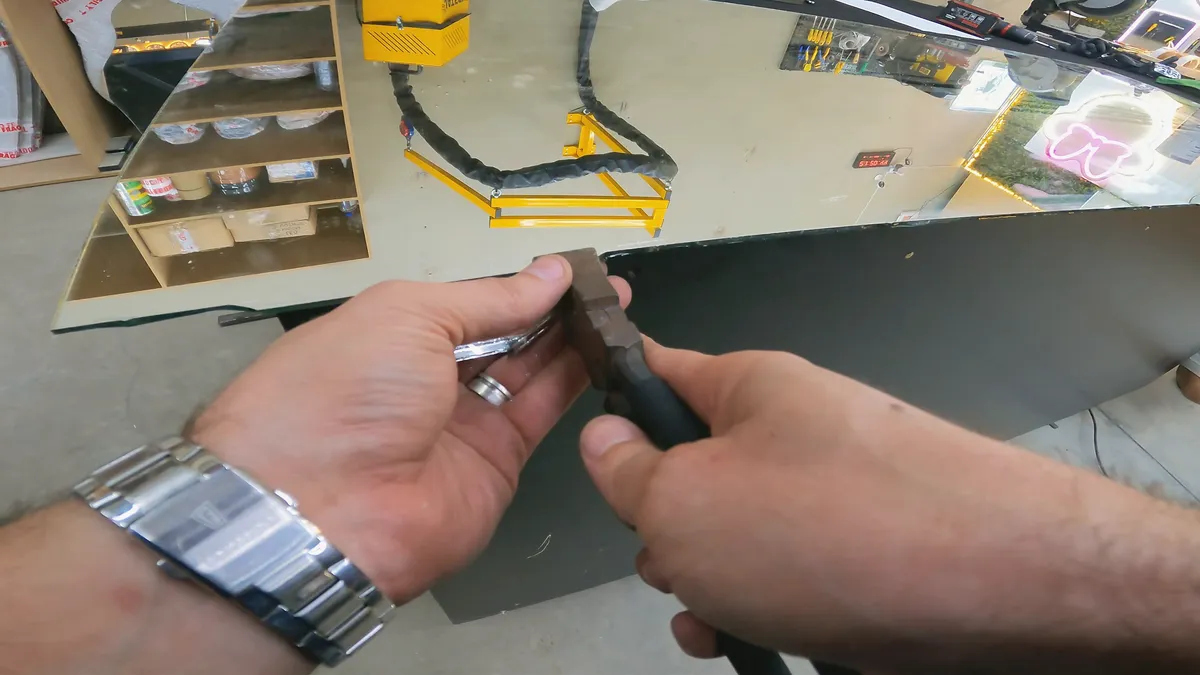
- Use the pliers to break out the strip, lined up with the score, not to chew the glass a little at a time.
- Break out right after scoring. A cold score, or one run twice in the same spot, opens worse.
- If the sheet already has a good straight side, use it. In EP3 the judges showed that chipping a sliver off an edge that was already straight left the mirror more crooked.
The score starts before the pliers
A lot of ugly edges are born in how you tap the score. In EP1, Vinícius, a judge with 30 years in glass shops, explained that tapping with the ball end of the cutter can make a “mini oyster” chip in the mirror backing, and that costs time later when seaming and sanding. His technique was a light tap from underneath, turning the piece until the whole score opened, and only then breaking out.
Put the two lessons together: a fully opened score, a strip with body to lever, pliers to break out. That way the edge comes out almost finished.
Glass sanding: the emergency finish
When the tooth is already there, sandpaper is what is left. That is what saved the piece in the final. Always sand wet, so you do not raise glass dust or heat the edge. Work along the edge, not across it, until the big teeth are gone, and knock down the sharp arris so nobody gets cut during installation. With a metal frame covering the edge, it can be delivered. On a mirror with an exposed edge, the real finish is on the edger.
- How much glass should I leave to take off with pliers?
- At the bench in the final the advice was at least half a centimeter. A thinner strip has no body to lever and the crack wanders off the score, leaving teeth.
- Why is the mirror edge jagged after using pliers?
- Because the piece was taken off in bits. Each squeeze breaks only one point and the crack leaves the score. The right way is to break out the whole strip at once.
- Can sanding fix the teeth?
- It can make the edge safe and acceptable, especially if a frame covers it, as in the final. Sand wet, along the edge. For an exposed edge, polishing on an edger is the proper finish.
Want to talk about cutting and finishing mirrors in your glass shop? Message me on WhatsApp at +55 31 9095-8383. And if you want to show your method at the bench, applications for the next season of Arena are open here on the site.
Full episode 4 · How to break out a mirror without chipping · How to edge a curved mirror without breaking it · The Arena do Vidro final