Published on 11/16/2026 · by Leandro Caldas, glazier, founder of Routeck and creator of the Arena
Glazier tips: 7 lessons from Arena do Vidro for your shop
I have given plenty of glazier tips on video, but none came out as clearly as the ones that showed up by themselves on Arena do Vidro. Two good professionals, a running clock, a judges' table watching: everything we get wrong when we rush in the shop showed up there, on camera.
Each of these topics already has a full post on this blog. Here I put on one page what I would take from the first season back to the shop. Seven lessons, in episode order, with a link for anyone who wants the details.
1. On mirror, watch the ball end of the cutter
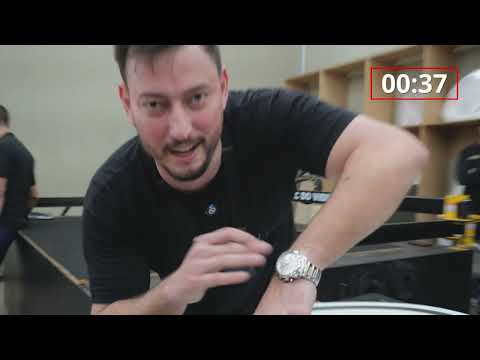
In Episode 1, Vinícius, a judge with thirty years in the trade, picked up the cutter and showed it: there is the diamond head, which does the cutting, and the part that holds the fluid. Many people open the score by tapping with the ball on the end. On mirror, depending on how you tap, the ball catches the silvering and leaves a small shell chip, a "butterfly". Later that costs you time when you seam the edge.
2. Big vinyl, working alone, goes on in strips
Still in Episode 1, at the sandblasting stage, two ways of applying the vinyl showed up. One competitor works with soapy water and, when he saw there was only water, went ahead with it, because dry film is hard to lay flat. The other cut the vinyl into strips, which is how he does it in his own shop: a big piece calls for a second person, and strips can be done alone.
3. On a short clock, count the finishing steps
Episode 2 gave ten minutes to deliver a finished mirror. At the table, one judge did the math out loud: a leather edge is two steps, gluing the backing and then gluing the strip, and he would not go that way with so little time. That makes sense. But the competitor who picked the route that looked faster struggled with the frame, and the one who took the two steps delivered. The lesson is not which finish to pick. It is to count the steps first and pick the one you have mastered.

4. In sales, the hard part is the approach, not the price
The second half of Episode 2 was selling the mirror on the street in fifteen minutes. Both sold in under three, one of them in 35 seconds. The advice from the table before the challenge was simple: walk up calmly, so you do not scare the person, and only speed up once they understand what you are offering. Later in the episode I said it myself: the point was not the amount, it was getting over the embarrassment of walking in and offering. At the counter it is the same: if you never offer the mirror to the shower customer, you never sell the mirror.
5. Do not look away during the breakout
In Episode 3, the mirror that was closest to the template cracked during the breakout. The explanation from the man who made it fit in a few words: he looked to the side and slipped. In a glass shop, the side is the phone, the customer asking a question, the helper calling you. And when it does crack, what the table said in the moment applies: first keep the crack from running, then decide what to do with the piece.
6. Welding pulls: leave clearance between mirror and frame
In the final, the mirror was cut exactly to the size of the metal frame. The weld pulled, the frame closed up and the mirror did not fit. The only way out was to cut the tubing and weld again, with the clock running. The man who cut it knew that welding pulls. In his words, the adrenaline did not let him remember. A few millimeters of clearance solve it before it becomes a problem.
7. Read the order before you complicate it
Also in the final, the rule asked for one thing only: the mirror had to stand upright in a metal frame. One of the competitors almost changed his project because he looked at what his rival was doing. Day to day, that is the quote: the customer asked for one thing and the glazier delivers another, more expensive and slower, because he saw it at a competitor.
Glazier tips that work at any bench
Notice that none of the seven depends on an expensive tool. They are habits: tap in the right place, count the steps, keep your eyes on the piece, leave clearance, read the order. Shops that cut on a machine take scoring and breakout off the list, but the other five still apply.
- What was the most expensive mistake of the season?
- The mirror cut exactly to the frame size, in the final. The weld pulled, it did not fit, and the frame had to be cut and welded again.
- Do these tips apply to shops that cut on a machine?
- Yes. The machine handles scoring and breakout. Finishing, frame clearance, reading the order and selling are still on the glazier.
- Where can I watch the episodes?
- All four episodes of the first season are on this site and on YouTube, in Portuguese, Spanish and English.
Which of these have you lived through in your shop? Tell me on WhatsApp +55 31 9095-8383. And if you think you would make fewer mistakes than the two of them, sign-ups for the next season are open on this site.
How to break out a mirror without chipping · Sandblast vinyl on mirrors: wet or strips · Leather edge or flexible frame · How to sell a mirror on the street in 35 seconds · Cracked mirror: what to do right away · Gap between mirror and metal frame · Read the rules before you cut · Router Glass: machine-cut mirrors